

How Tutoring Can Improve End-of-Semester Readiness
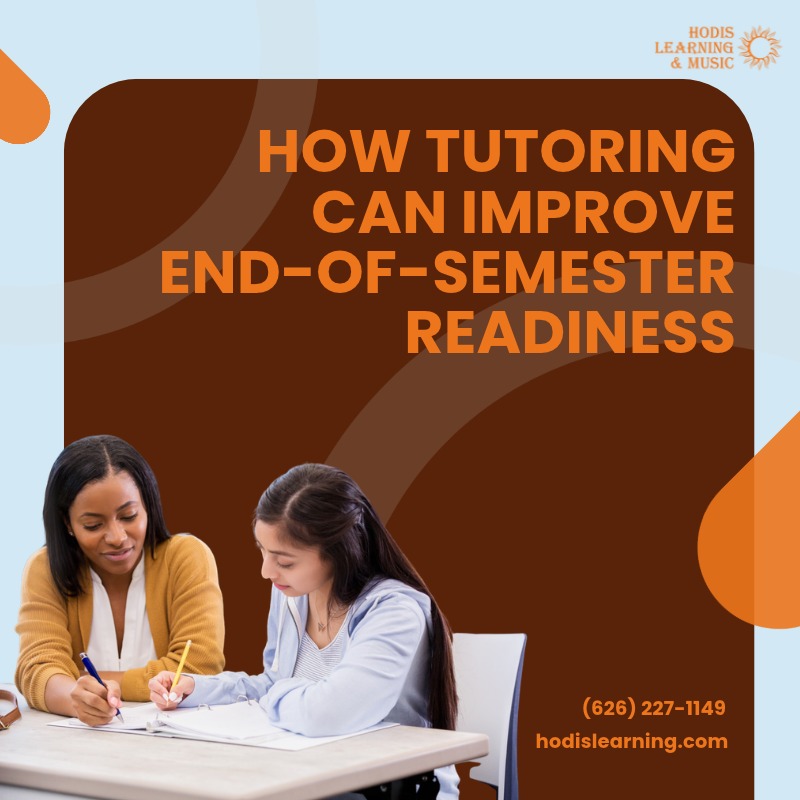
By November, students have spent several months learning new material, completing assignments, and taking tests. For many families, this is when patterns start to emerge. Maybe your student consistently struggles with a particular type of math problem, receives similar feedback on every essay, or spends hours on homework that should take much less time.
These challenges don’t necessarily mean a student isn’t working hard enough. Sometimes, they’re signs of learning gaps that have developed over the course of the semester.
With final exams approaching, November is a great time to identify these gaps and address them before students are faced with reviewing an entire semester’s worth of material.
One-on-one academic tutoring can help students strengthen their understanding of difficult subjects, develop effective study strategies, and approach the end of the semester with greater confidence.
Why Learning Gaps Become More Noticeable Later in the Semester
Many academic subjects build on previously learned material. When students don’t fully understand a foundational concept, they may find it increasingly difficult to keep up as their classes progress.
Consider a student taking Algebra II who struggled with factoring polynomials earlier in the semester. They may have managed to complete assignments and pass quizzes by following examples or memorizing certain steps. However, when their class moves on to solving quadratic equations, that incomplete understanding can become a bigger obstacle.
The student might spend hours working through homework, grow frustrated when their answers are incorrect, or begin to believe they’re simply not good at math. In reality, they may need additional instruction and practice with an earlier concept before they can confidently tackle the new material.
This is why identifying learning gaps before final exams is so important. By November, students have enough graded assignments, quizzes, and tests to begin recognizing patterns in their academic performance. Addressing those challenges now gives them time to strengthen their understanding while continuing to learn new material.
How Academic Tutoring Can Help Close Learning Gaps
One of the greatest benefits of one-on-one academic tutoring is the opportunity to focus on a student’s individual learning needs.
In a classroom, teachers must balance the needs of many students while following a curriculum and keeping pace with the school calendar. Even when teachers offer additional help, there may not always be enough time to revisit every concept a student finds challenging.
A tutor can provide more individualized attention, helping students understand where they’re struggling and why.
For example, the Algebra II student we discussed earlier might benefit from reviewing factoring techniques before returning to quadratic equations. Their tutor can work through problems with them, identify where they’re getting stuck, explain concepts in different ways, and provide additional practice.
As the student becomes more comfortable with those foundational skills, they can begin applying them to the material they’re currently learning in class.
Tutoring can also benefit students who are already performing well academically. Students preparing for cumulative finals may appreciate having someone help them organize their review, work through challenging practice questions, and reinforce their understanding of material they haven’t studied in several months.
Use Past Assignments and Tests to Identify Areas for Improvement
Before students begin studying for finals, encourage them to look through their previous assignments, quizzes, tests, and teacher feedback. Rather than focusing exclusively on the grades they received, students should consider why they lost points.
Did they misunderstand a concept? Make a calculation error? Misinterpret an essay prompt? Run out of time before completing a test?
Students can also look for patterns across multiple assignments. If a teacher repeatedly comments on unclear thesis statements or insufficient evidence in essays, those are specific writing skills to work on before a final paper.
A tutor can help students interpret this feedback, identify priorities, and develop a study plan that focuses on the areas where additional support will be most valuable.
Don’t Wait Until Finals Week to Ask for Help
When students realize they’re struggling in a subject, it’s tempting to put off addressing the problem until a major exam is approaching. Unfortunately, waiting until the last minute can make the process more stressful.
Trying to relearn several months of material in a few days doesn’t leave much time to ask questions, practice new skills, and build confidence.
Starting academic tutoring in November allows students to work through difficult concepts gradually, rather than trying to address everything during finals week.
It also gives families more flexibility when scheduling sessions around school, extracurricular activities, and holiday commitments.
Prepare for Finals With Hodis Learning & Music
Final exams can be challenging, but students don’t have to navigate their preparation alone.
At Hodis Learning & Music, our experienced academic tutors provide personalized, one-on-one instruction tailored to each student’s needs, strengths, and goals. Whether your student needs help closing learning gaps, strengthening their understanding of a particular subject, or preparing for exams, we’re here to help them approach their academic challenges with greater confidence.
Ready to get started before finals? Call us at (626) 227-1149 or submit a contact form to learn more about our academic tutoring services.
