

Test Anxiety vs. Lack of Preparation: How Tutoring Addresses Both
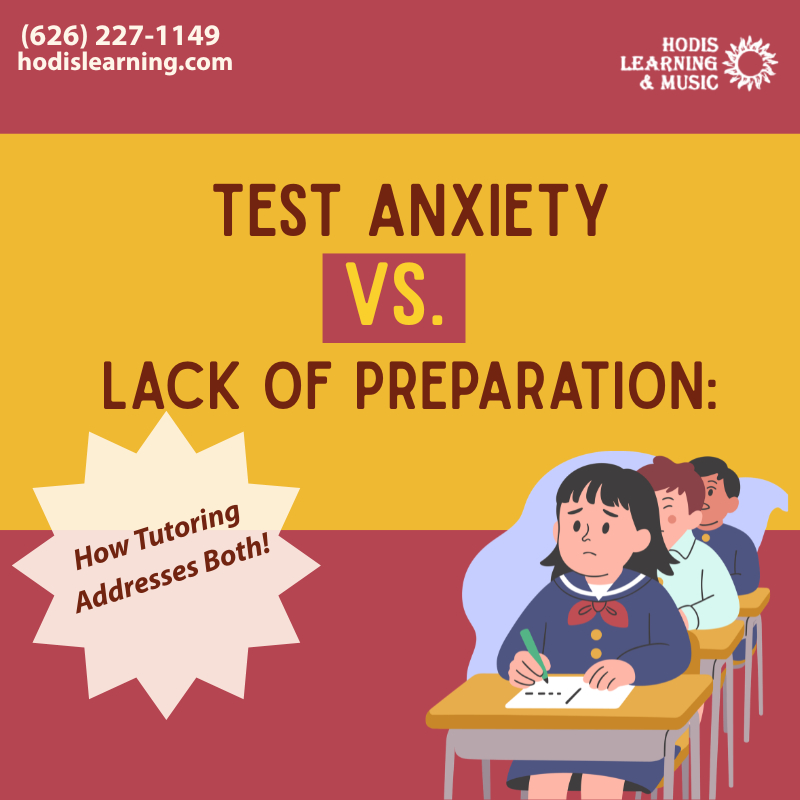
When a student struggles on tests, it’s not always clear what’s causing the issue. Is it test anxiety? A lack of preparation? Or a combination of both?
For parents and educators, understanding the difference is key. The root cause directly impacts how best to support the student, and that’s where targeted tutoring can make a meaningful difference.
What Is Test Anxiety?
Test anxiety is more than just feeling nervous before an exam. It’s a type of performance anxiety that can interfere with a student’s ability to think clearly, recall information, and demonstrate what they know.
How It Commonly Presents
Test anxiety can look different depending on the student’s age and personality:
- Younger students may complain of stomachaches, headaches, or try to avoid school on test days.
- Middle school students might show frustration, irritability, or say things like “I’m bad at tests.”
- High school and college students may experience racing thoughts, blanking out during exams, or excessive self-doubt.
In all cases, the key sign is this: the student knows the material when studying, but struggles to demonstrate that knowledge under pressure.
Why Do Students Experience Test Anxiety?
There are several common causes for test anxiety, including but not limited to:
- Fear of failure or disappointing others
- Pressure to achieve high grades
- Past negative testing experiences
- Perfectionism
- Lack of confidence in their abilities
Sometimes, anxiety develops even when a student is well-prepared academically. It’s important to help students and address anxieties early before they turn into burnout.
When It’s a Lack of Preparation
On the other hand, some students struggle with tests simply because they aren’t adequately prepared. It usually points to gaps in skills or support, rather than the student being incapable.
Common Causes of Poor Preparation
- Gaps in foundational knowledge: If earlier concepts weren’t fully understood, new material becomes harder to grasp.
- Weak executive functioning skills: Difficulty with organization, time management, and planning can make consistent studying a challenge.
- Unaddressed learning differences: Students with ADHD, dyslexia, or other learning differences may need tailored strategies.
- Social or emotional challenges: Stress, lack of motivation, or low confidence can interfere with effective studying.
- Ineffective study habits: Rereading notes or cramming the night before often isn’t enough for long-term retention.
How Tutoring Helps Students With Test Anxiety
When anxiety is the primary issue, tutoring focuses on building both skills and confidence.
Teaching Practical Test-Taking Strategies
Our educators will help students learn how to manage time effectively during exams, using the process of elimination on multiple-choice questions, and break down complex questions into manageable steps.
These strategies reduce overwhelm and give students a clear plan during tests.
Simulating Test Conditions
Tutors can help students prepare by simulating test conditions with timed quizzes or practice exams. This helps students become familiar with pressure in a low-stakes setting, become comfortable with pacing, and reduces fear of the unknown.
Building Confidence Through Support
One of the most powerful benefits of tutoring is the relationship students build with their tutor.
With consistent encouragement, positive reinforcement, and personalized attention, students begin to trust their abilities and feel more in control. This can build confidence and self-esteem in students who have test anxiety.
How Tutoring Helps Students Who Lack Preparation
For students who need stronger academic foundations or study habits, tutoring provides structure and accountability.
Strengthening Executive Functioning Skills
Educators can help students plan ahead for exams, organize materials and assignments, and develop consistent study routines.
Creating Accountability
Having a designated time, place, and person to study with makes a big difference. Tutoring creates:
- Consistency
- Clear expectations
- A sense of responsibility
Reviewing Key Concepts
Tutors identify and reinforce foundational skills that are likely to appear on exams. This ensures students aren’t just memorizing—but truly understanding—the material.
How Hodis Learning & Music Can Help
Test anxiety and lack of preparation often overlap, but they require different approaches. A student with anxiety needs confidence, familiarity, and emotional support. A student who is underprepared needs structure, skill-building, and consistency.
The right tutoring approach addresses both, helping students feel capable and prepared at the same time.
At Hodis Learning & Music, we always take a personalized approach to test preparation. If your student is struggling with tests and you’re not sure why, we’re here to help. Call us at (626) 227-1149 or submit a contact form on our website to learn more or schedule a session.

