
Tag Archive for: learning

Understanding learning gaps

Understanding what learning gaps are, and how to address them, can make a powerful difference in a student’s confidence, progress, and long-term success. In this article, we’ll explain what learning gaps are, why it’s important to address them, and how to close those gaps.

What Are Learning Gaps?

Learning gaps occur when a student hasn’t fully mastered a skill or concept that’s essential for future learning.

These gaps can develop for many reasons: missed school days, fast-paced classrooms, curriculum changes, or even a brief period of confusion that was never fully resolved. Over time, small gaps can grow, making new material feel frustrating or overwhelming.

Why Learning Gaps Matter

Academic subjects build on one another. In math, for example, difficulty with fractions can impact algebra. In reading, weak foundational skills can affect comprehension and writing.

When gaps go unaddressed, students may lose confidence, disengage from learning, or believe they’re “not good” at a subject. In reality, they simply need targeted support.

How Tutoring Helps Close the Gaps

Personalized tutoring is one of the most effective ways to identify and address learning gaps. By meeting students where they are, tutors can pinpoint missing skills, reinforce foundational knowledge, and connect it to current coursework. This individualized approach allows students to learn at the right pace, ask questions freely, and rebuild confidence along the way.

A Path Forward

At its core, understanding learning gaps is about recognizing potential, and giving every student the tools they need to reach it. Addressing gaps early helps create a smoother, more positive academic experience and sets students up for lasting success.

To learn more about how Hodis Learning & Music can help your student fill in learning gaps, give us a call at (626) 227-1149 or submit a contact form on our website. With the right support, students can not only catch up, but often move ahead with stronger understanding and renewed motivation.
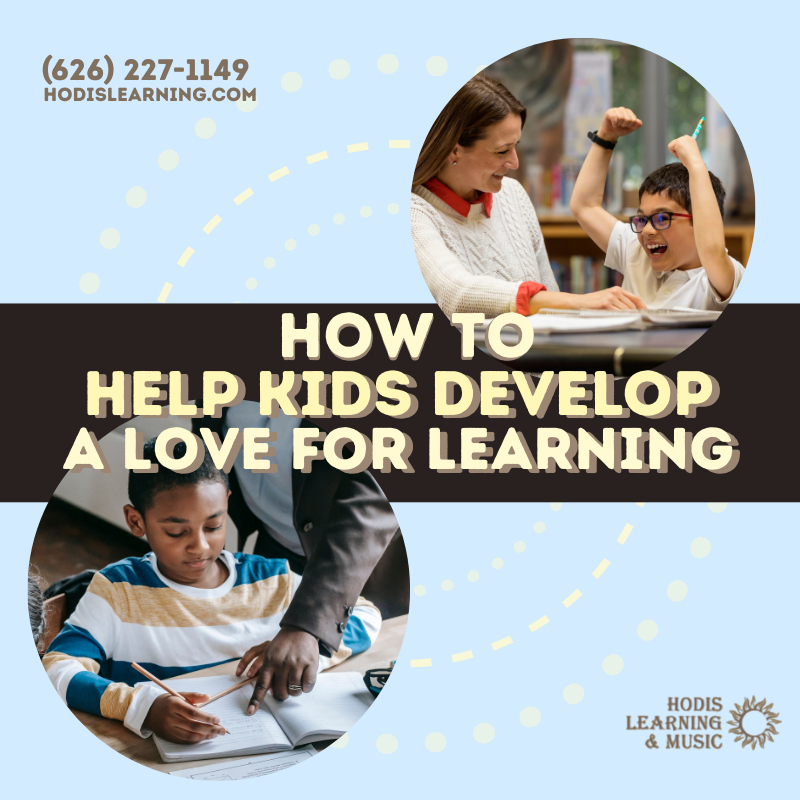
 

How to help kids develop a love for learning

Encouraging Curiosity & Learning Free From Pressure

As parents and educators, we all want children to succeed. More importantly, we want them to enjoy the process. When learning feels like a chore, motivation drops. But when curiosity is nurtured and discovery feels exciting, students become lifelong learners.

Hodis Music and Learning believes that the best kind of education is one that sparks curiosity, invites creativity, and encourages exploration without stress or pressure. Here’s how you can help your child develop a genuine love for learning in a joyful, low-pressure way.

1. Make Curiosity the Starting Point

Children are naturally curious. They ask questions, explore the world around them, and constantly wonder why and how things work. Instead of rushing to give answers, try responding with open-ended questions like:

  • “What do you think?”
  • “Why do you think that happens?”
  • “How could we find out together?”

This encourages kids to think critically and see learning as a shared adventure, not just a right-or-wrong task.

2. Follow Their Interests

Lean into your child’s interests and foster that curiosity, whether it’s in dinosaurs, outer space, cooking, or music. Every passion can be turned into a learning opportunity. For example:

  • A love of animals can lead to exploring biology or veterinary medicine.
  • An interest in video games can open the door to coding.
  • Cooking can spark lessons in math, chemistry, or even business.

When children learn through what they love, their engagement naturally increases.

3. Create a Low-Pressure Learning Environment

Kids learn best when they feel safe, supported, and unafraid to make mistakes. Celebrate effort and progress rather than focusing solely on grades or perfection. Try saying:

  • “I love how hard you worked on this!”
  • “What did you learn while doing that?”
  • “It’s okay that it didn’t go perfectly. What could we try differently next time?”

This teaches kids that learning is a journey, not a race, and sometimes the best lessons are learned through setbacks or failure.

4. Make Learning Fun and Hands-On

Learning doesn’t have to look like a traditional classroom. In fact, some of the best lessons happen outside of it. Here are a few fun, everyday ways to engage your child:

  • Play educational games (board games, puzzles, or apps)
  • Explore nature and ask science questions
  • Build something together with LEGOs, blocks, or recycled materials
  • Visit museums, libraries, or attend community events
  • Encourage storytelling through drawing, writing, or performing

Interactive experiences help make abstract concepts feel real and relevant.

5. Be a Role Model for Lifelong Learning

Children often emulate the attitudes and behaviors they see in adults. Show them that learning doesn’t stop at school:

  • Read books in front of them
  • Share something new you’ve learned
  • Talk about your own challenges and how you overcame them

When kids see you enjoying learning, they’ll be more likely to do the same.

6. Partner with Supportive Educators

Sometimes, a child just needs the right guide to help them find joy in learning. At HLM, our tutors create a supportive, encouraging environment where curiosity is celebrated and learning feels exciting not overwhelming. We tailor our sessions to each child’s interests, strengths, and pace, making education both effective and enjoyable.

The Takeaway: Love for Learning Grows When It’s Nourished with Joy

With the right mindset and support, learning becomes something children want to do, not something they have to do.

Ready to help your child fall in love with learning? Call us at (626) 227-1149 or send us an email today.


The Benefits Of Outdoors Learning in Homeschooling

One of the greatest freedoms when homeschooling is learning outside the confines of a traditional classroom setting. Any environment can be a classroom, and one of the most enriching classrooms available is the great outdoors. From local parks and backyards to hiking trails and botanical gardens, nature provides endless opportunities for learning, creativity, and adventure. Read on to discover the benefits of outdoor learning!

Why Nature is a Powerful Teacher

Research consistently shows that time spent in nature improves cognitive function, enhances mood, boosts physical health, and encourages curiosity. For children, especially, being outdoors supports essential areas of development.

  • Cognitive and Academic Growth: Studies have found that outdoor learning improves focus, critical thinking, and problem-solving. The sensory-rich experiences of nature help cement knowledge in meaningful ways.
  • Emotional Well-being: Natural settings reduce stress, anxiety, and symptoms of ADHD. Being outside offers a calm, grounding space for children to regulate their emotions.
  • Physical Health: Outdoor play and exploration naturally build gross motor skills, improve balance and coordination, and contribute to overall fitness.
  • Social and Communication Skills: Whether identifying bugs or building a fort with peers or siblings, outdoor learning often promotes collaboration and shared discovery.

Using Nature as a Classroom

Outdoor learning isn’t just about recess or free play. It can be a structured and intentional part of your homeschool curriculum. Here are a few creative ways to weave outdoor experiences into core academic subjects.

Science in the Wild

  • Nature Journals: Encourage your child to observe and record plants, animals, weather patterns, and ecosystems.
  • Bug and Plant Identification: Use field guides or apps to identify local flora and fauna.
  • Hands-on Experiments: Test soil pH levels, measure temperature changes in different environments, or study decomposition using compost bins.

Creative Expression

  • Nature Art: Make collages with leaves, rocks, and flowers, or use natural materials as paintbrushes.
  • Outdoor Storytelling: Have your student write stories or poems inspired by things they observe in nature, like animals or plants.
  • Photography or Drawing: Explore perspective, light, and composition using natural scenes.

Math Outside

  • Math Scavenger Hunts: Count pinecones, estimate distances, or measure tree heights using shadows and basic geometry.
  • Mapping Skills: Draw maps of your neighborhood or a local park to learn geography.

Real-Life Benefits for Homeschool Families

Outdoor learning is particularly valuable for homeschooling families because it offers:

  • Flexibility: You can go at your own pace and adapt based on weather, interest, or energy level.
  • Affordability: Most nature-based learning is low-cost or free.
  • Multi-Age Learning: Nature naturally accommodates different ages and skill levels, making it easier to teach siblings together.

Want to Learn More About Homeschooling?

If you’re exploring homeschooling or looking for fresh ways to enrich your child’s education, Hodis Learning & Music is here to help. We specialize in tailored tutoring and homeschool support that brings learning to life, both indoors and outdoors.

Call us at (626) 227-1149 or send us a message today to learn how we can help your child thrive through personalized homeschool programs, including outdoor learning adventures.